
Design thinking is a human-centered, iterative, creative, problem-solving process. It helps teams manufacture innovation. It keeps people at the center of the process with the hope to create products that actually meet user needs and goals.
Design thinking is not the sole property of UXers. It’s been widely used across industries for decades.
As described by IDEO, one of the leaders in design thinking, “This approach, which is known as design thinking, brings together what is desirable from a human point of view with what is technologically feasible and economically viable. It also allows people who aren’t trained as designers to use creative tools to address a vast range of challenges.”
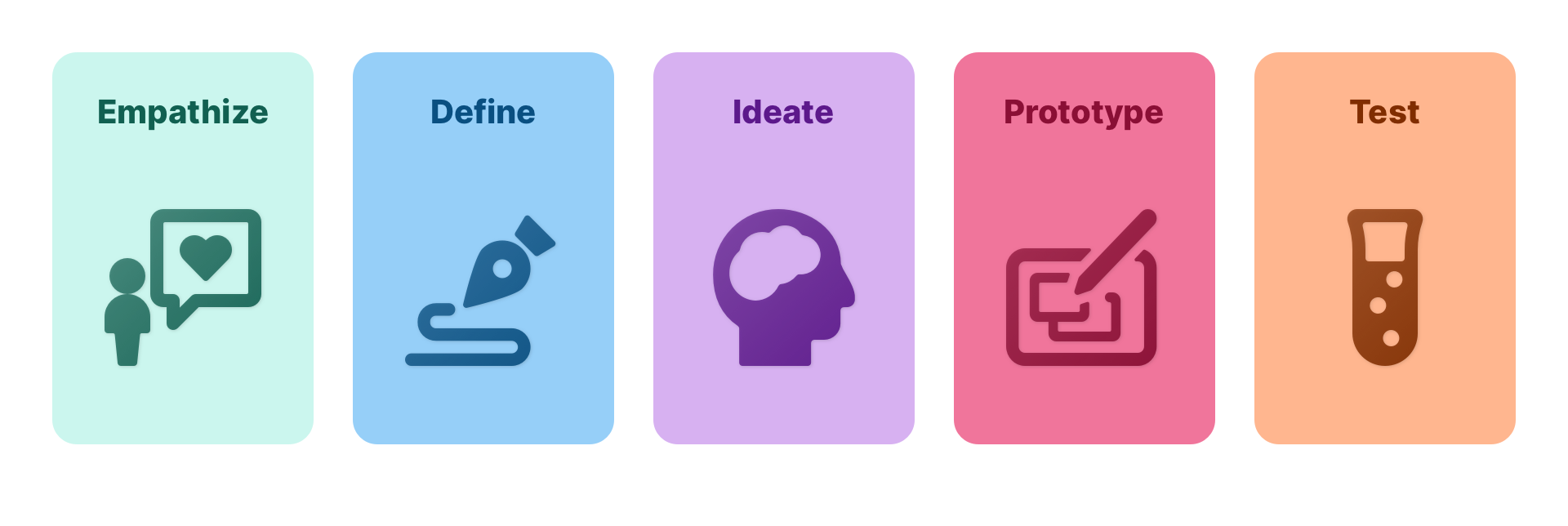
This is where you learn about user problems, needs, and goals. You’re looking to gain empathy for the user and the problem they’re experiencing. Empathy is at the center of design thinking and UX as a whole because it helps you look at the problem from the user’s perspective and not your own.
After learning all about the problem during the empathize phase, you analyze the data collected and define the problem. Here, you create things like affinity maps and personas to guide you through the rest of the design process. The goal is to build a strong foundation for your ideas.
Now that the problem is defined, it’s time to try a bunch of things out. You want to generate as many ideas as possible. You’re looking to challenge the status quo and any of the assumptions about the problem you stated earlier in the process. You can’t know the best solution until you’ve considered all the options.
After ideating, it’s time to start experimenting with the different ideas you came up with during the previous phase and begin creating prototypes that you’ll test.
With your prototypes in hand, it’s time to learn if your solutions hit the mark. This is where you’ll run usability tests with real users to see what they think. You’ll get valuable feedback that you’ll use to either return to previous phases of the process to iterate further, or to move on to a final stage of production.
It’s important to point out that these phases aren’t linear and it’s not a step-by-step process. It’s typical to jump back and forth between them and/or run phases in parallel.
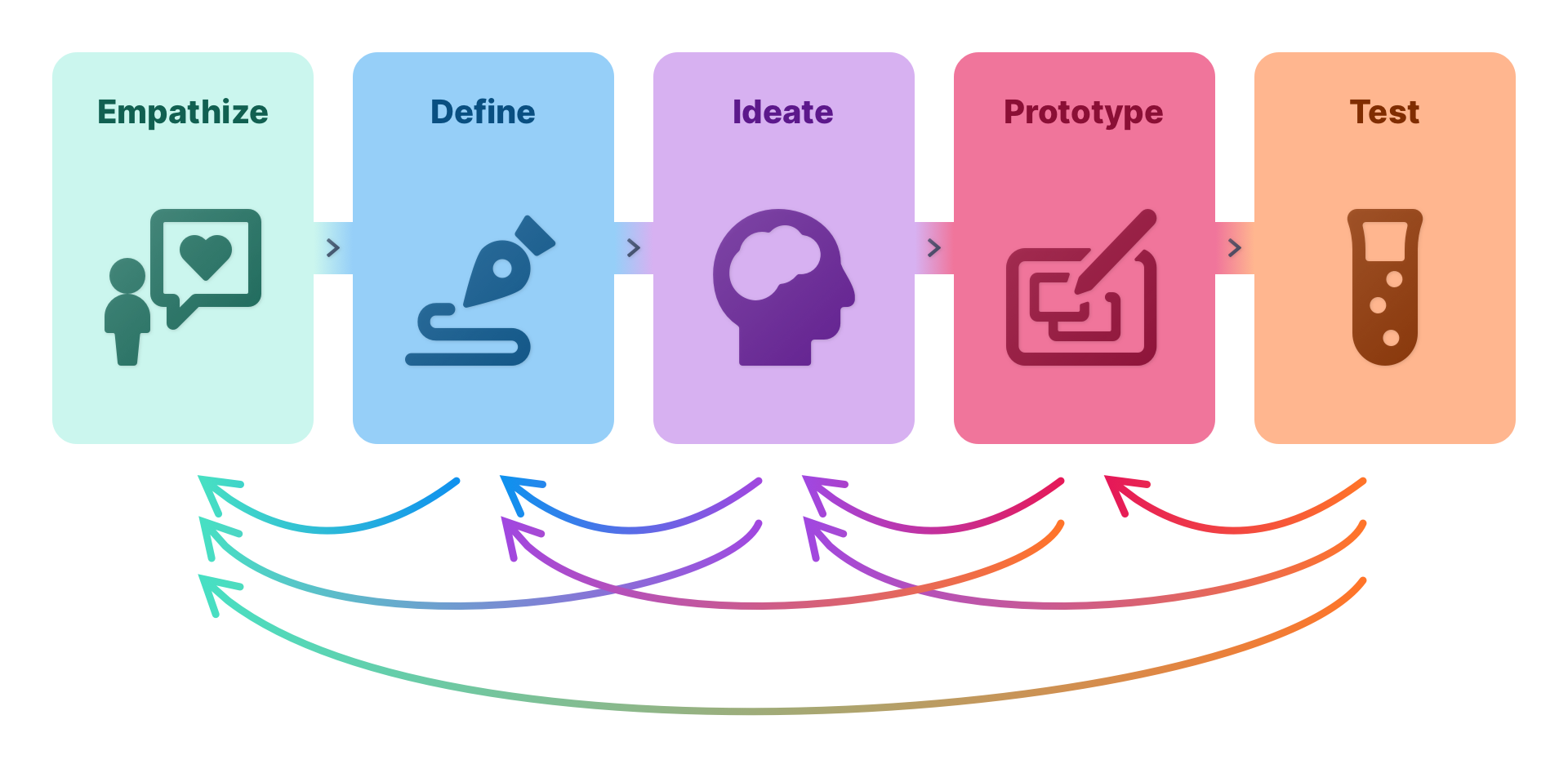
Additionally, while there are a vast number of methods you can use during each phase, the 5 phases always remain the same. Think of the process as being dynamic. Depending on the context and the problem you’re solving, you apply the phase and methods that make the most sense.
Does this sound familiar to the UX process we talked about previously? It should. Design thinking is built into our UX process. The Empathize and Define stages are the equivalent to Research & understanding. Ideate is the same as Information architecture & wireframing. Prototype and Test are the same as... you guessed it... the Prototyping & usability testing phase. And our process includes the final step of handing off for production, Visual design & handoff.
